

The Anti-CEO
Why the leader the future needs is the opposite of what we've been training for.

Previously on Giuseppe’s Glimpse: In the last episode, we explored why AI is forcing professional services to rethink how they charge. Missed it? Catch up here! ✨
Buongiorno everyone 👋
I wrote about something recently that made a few people uncomfortable: CEOs are, on average, more incompetent than ever before.
Before anyone accuses me of easy cynicism, let me explain. I don’t say this with malice. I say it because I think it’s true, and because understanding why matters more than the provocation itself.
I was thinking about this after reading a newsletter by my friend Seth Godin on the topic, which got me reflecting on how much has changed.
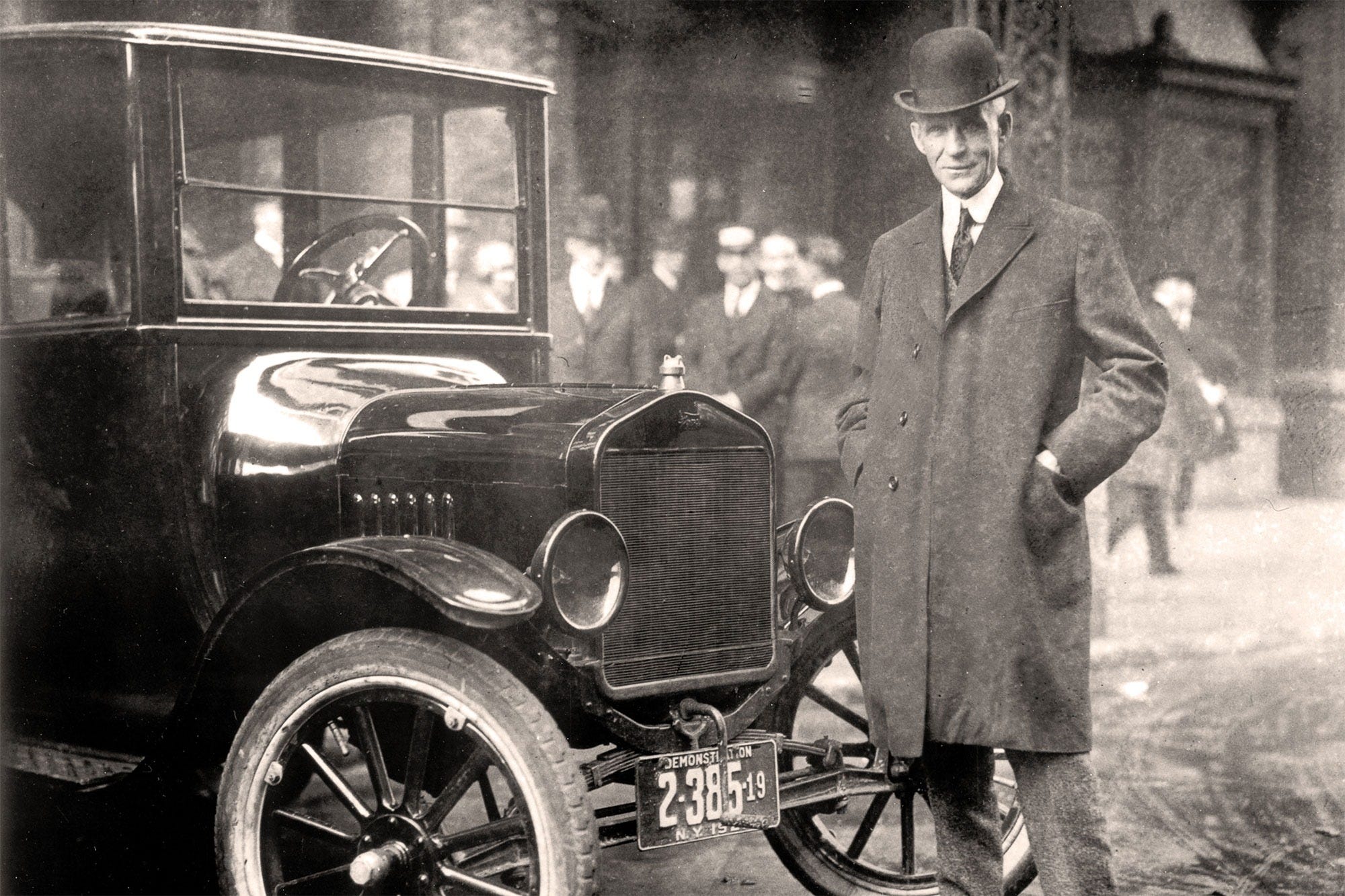
A century ago, Henry Ford could drive his own car. He understood, with reasonable precision, what it took to build one. The gap between what a business leader needed to understand and what they actually understood was manageable. The boss knew more than their subordinates about the things that mattered most, and that’s where their authority came from. 🚗
Now think about what a CEO is expected to have an informed opinion on in any ordinary work week: generative AI adoption, global supply chain fragility, cybersecurity posture, digital marketing ROI, talent retention in hybrid markets, geopolitical risk, ESG reporting, data privacy regulation, asset tokenization, DEI agenda.
That list applies equally to a twenty-person company and a Fortune 500.
Nobody can master all of that. It’s a structural impossibility.
Why the model is broken
Here’s what’s happening: the more complex business environments become, the wider the gap between what’s expected of the top leader and what any human can reasonably know.
I’m not saying individual CEOs are worse people or less prepared professionals. I’m saying the leadership model we’ve inherited (and still teach in most business schools) is obsolete by design.
The problem is the concept of CEO itself.
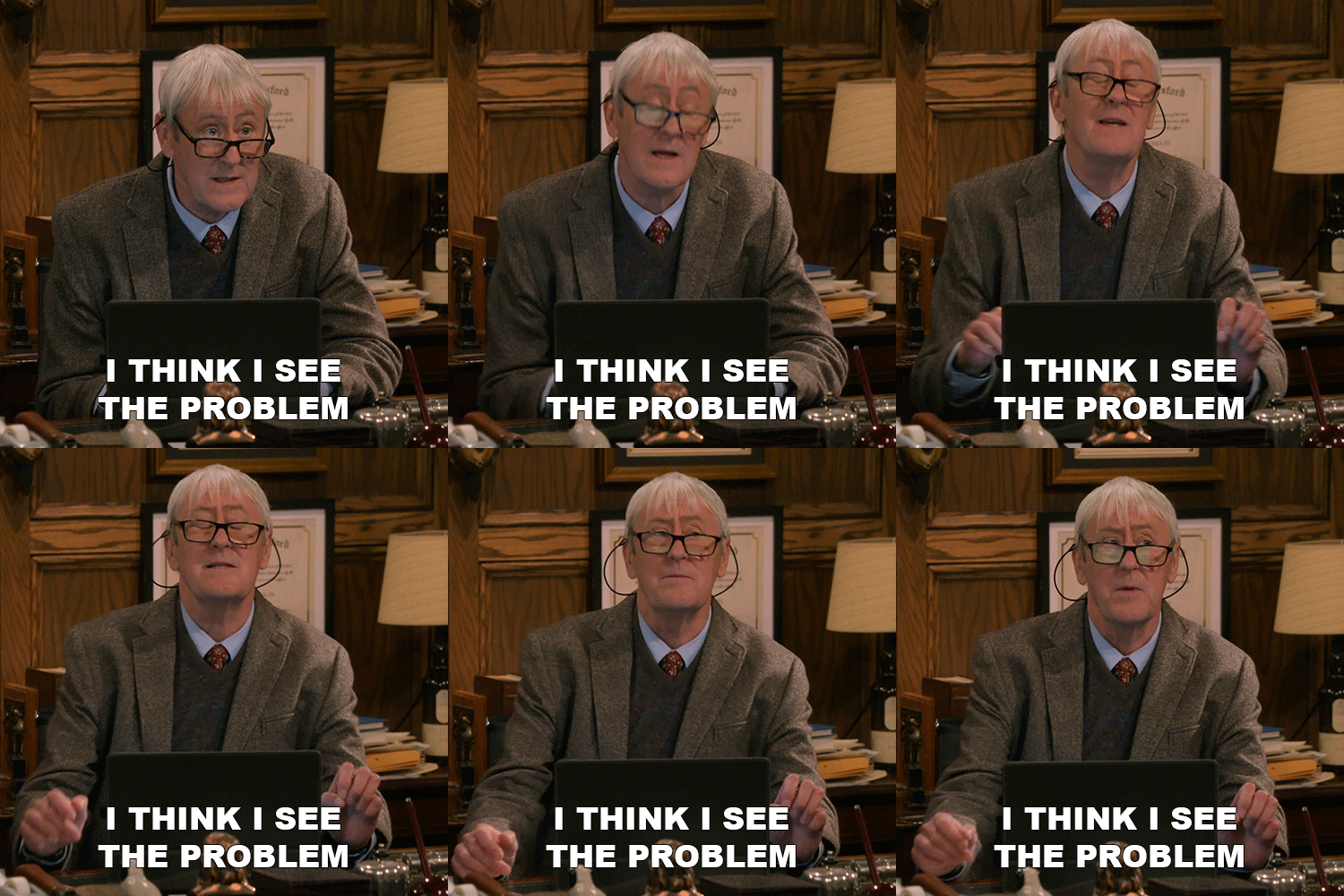
There’s real pressure that comes with the role. The pressure to appear like you know, to speak with more conviction than you have, to let instinct substitute for information there’s no time to gather.
I’ve done it, and I suspect most leaders have.
Academic research on this is consistent. The Dunning-Kruger effect has been widely documented. And there’s also a more dangerous variant in executive environments: institutional pressure toward false certainty. 💭
In a boardroom, well-founded doubt looks like weakness. Saying “I need more information” or “I’m not certain” gets read as indecisiveness. Leaders learn quickly that appearing confident matters more than being right.
The result is organizations that project certainty while flying blind. They make big investments based on instinct dressed up as strategy, and looking decisive becomes more important than being right.
The anti-CEO: a proposal
The term “anti-CEO” has been around for a while. What I want to focus on is what it means in practice, because I think we need more specificity about these competencies.
The anti-CEO isn’t a heroic figure. It’s a set of competencies that are often exactly opposite to what we’ve valued and rewarded for decades. It’s about knowing differently, leading differently, and extracting value from places where the traditional CEO doesn’t even look.

Let me walk through five inversions that define this approach.
(1) From certainty to comfort with ambiguity
The classic CEO was trained to give answers. Their days are structured around decisions, approvals, directions. The language is declarative: “We do this,” “We go there,” “We close this.” Ambiguity gets fought and eradicated.
What I’m seeing work differently: leaders who’ve developed what psychologist Elliott Jaques called tolerance for abstract uncertainty. The ability to hold multiple hypotheses open at once, to make reversible decisions while accumulating information, to update positions without seeing that change as failure.
When variables change faster than planning cycles, premature certainty creates more problems than well-calibrated doubt. 🎯
Satya Nadella is probably the clearest example. When he arrived at Microsoft in 2014, he found a culture that rewarded knowing over learning. Well, he replaced “know-it-all” with “learn-it-all”, and Microsoft’s market cap went from $300 billion to over $3 trillion in a decade.

(2) From vertical expertise to connector intelligence
The traditional executive built their career deepening in one domain. The knowledge pyramid was vertical: you climbed step by step on the same axis.
The anti-CEO is a domain connector. Someone who understands enough about disparate systems (technology, human behavior, regulation, culture) to detect the intersections where value gets created and where invisible risks lurk.
People who connect groups of knowledge that normally don’t communicate generate way more value for their organizations than the deepest experts in those same groups. The value is in the bridges, not the towers. 🌉
(3) From talking to listening with strategic intent
We associate executive authority with voice: the grand speech, the articulated vision, the board presentation.
The anti-CEO understands that the most valuable information for making good decisions rarely arrives from top to bottom. It arrives from the edges: the salesperson who hears customer objections, the engineer who knows what’s technically possible before the market does, or the customer service team that knows when a product is losing traction.
What works: designing deliberate systems to capture those weak signals before they become urgent alarms. Listening as strategic practice, and actually acting on what you hear, closing the trust loop that invites more people to speak honestly. 👂
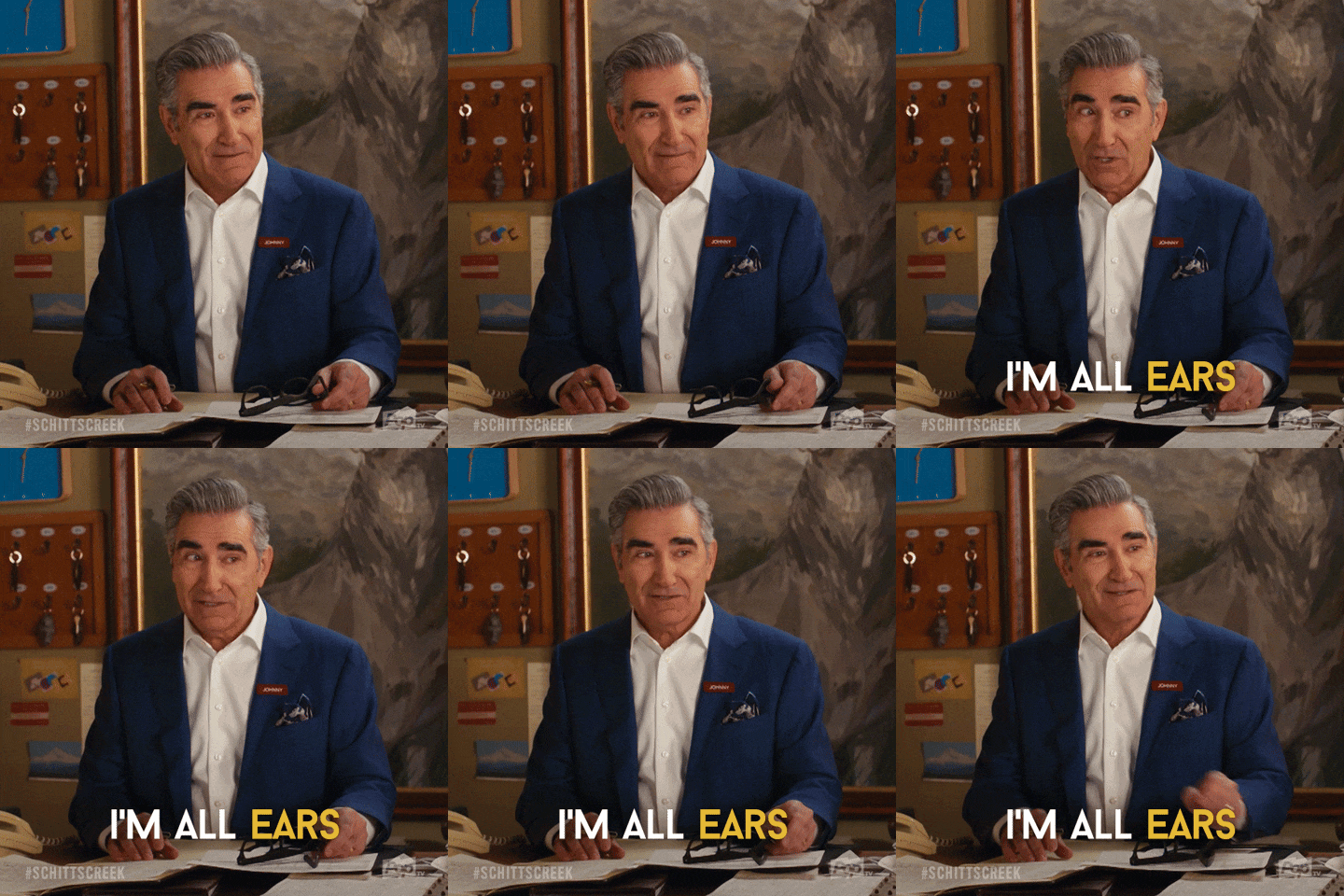
Ray Dalio institutionalized this at Bridgewater with his “idea meritocracy“ system: any employee, regardless of rank, can (and must) openly question any decision.
(4) From perfect execution to imperfect experimentation
The 20th century rewarded efficiency. The CEO was the guardian: eliminating variance, standardizing processes, building control systems that guaranteed reproducibility.
Now competitive advantage comes from discovering the unknown before others do. And discovering requires experimenting. And experimenting involves failing.
The key is building organizational capacity to learn faster from inevitable errors than competitors. The anti-CEO designs systems that convert failure into actionable information before it gets expensive. 🔬
Amazon calls it “working backwards.” Apple calls it “1,000 ideas to get to one.” Same approach: exploring what’s possible rather than perfecting what’s known.
(5) From positional authority to earned authority
The classic CEO’s authority was largely positional: it derived from the role, the title, the org chart. People followed the CEO because the CEO was the CEO.
In high-complexity environments, that logic flips. The most talented professionals (especially younger ones) follow judgment. Rather than titles, they respect coherence between what gets said and what gets done. ⚡
Authority becomes a flow. It renews every time you make an honest decision on uncertain terrain, and it erodes every time you pretend to know what you don’t.
The gap we are facing today
There’s an elephant in most boardrooms: the gap between the skills the leadership market incentivizes and the skills the current context demands.
CEO selection processes still mostly prioritize track records of growth in benign environments, ability to articulate simple narratives about complex realities, and relationship networks that guarantee immediate legitimacy.
McKinsey projects that between 40% and 60% of the most valued executive competencies today will be irrelevant or insufficient by 2030, as a consequence of automation, AI, and the reconfiguration of work models. 📊
We’re talking about the core of the executive role. Something to think about.

Where does this leave leadership
The anti-CEO makes decisions with as much determination as the classic CEO, sometimes more. They just make them from a different place: from clarity about what they actually know, what they don’t, and what they need to learn.
Henry Ford knew how to build a car. No 21st century CEO can know everything needed to compete in current markets. That’s an impossible standard.
The real goal is building organizations that learn faster than their competitors and convert uncertainty into advantage.
That’s what it looks like when you stop pretending you can be what you structurally can’t be.
And maybe there’s more authority in that honesty than in the performance we’ve been rewarding.
Stay curious 🙌
-gs
Oh, wow! You made it to the end. Click here to 👉 SHARE this issue with a friend if you found it valuable.
Strong piece, Giuseppe.
The part on earned authority is the key for me.
In complex environments, authority no longer comes only from the role. It comes from judgment under uncertainty, and from the coherence between what leaders say and what systems actually do.
That is also where experimentation matters. Not as a slogan, but as the ability to learn before the cost of being wrong becomes too high.
👏🏻👏🏻👏🏻