

The Cobra Effect
Why misaligned incentives turn solutions into bigger problems.

Previously on Giuseppe’s Glimpse: In the last episode, we explored why “doing less harm” is no longer a strategy and why purpose becomes real when it drives difficult decisions. Missed it? Catch up here! ✨
Buongiorno everyone 👋
There’s a story about cobras I heard years ago, and it’s been coming back to me a lot lately.
In colonial India, the British authorities had a problem: too many cobras. To tackle this, they came up with what seemed like a clever enough solution: pay people for every dead snake.
At first, it worked. Then some locals started breeding cobras for the bounty. When the British discovered this and cancelled the program, the breeders released the snakes, and the problem got worse.
That backfire became known as the “Cobra Effect.” 🐍
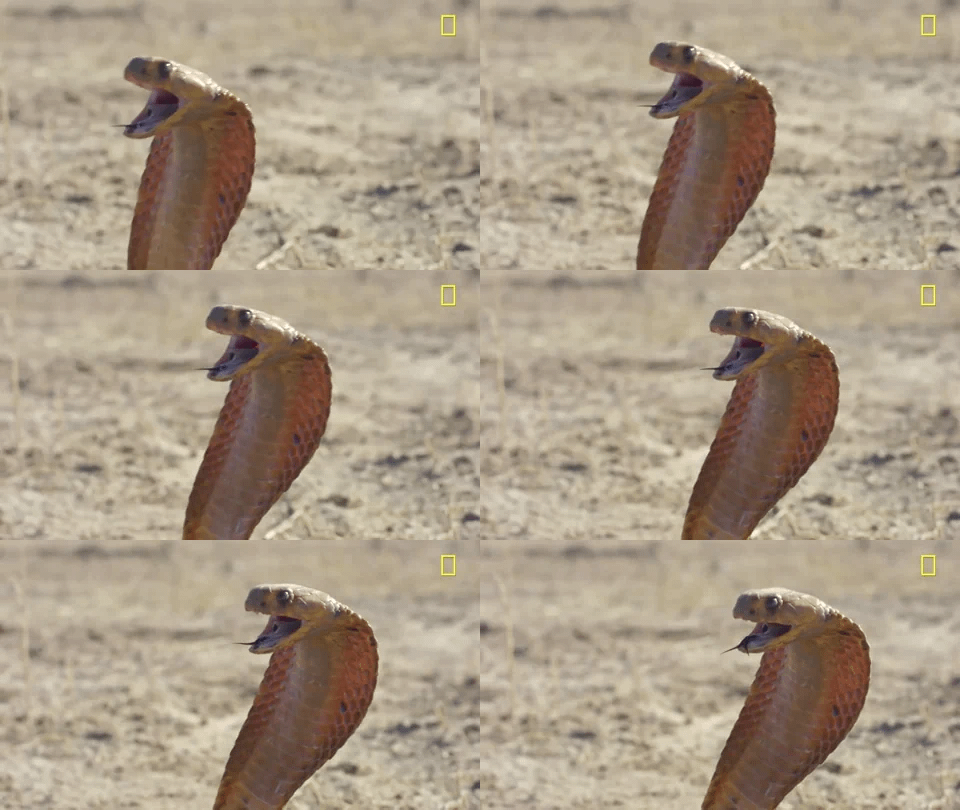
This small, slightly absurd story stuck with me. It’s a good reminder that most systems fail not because people are foolish, but because they respond logically to the signals they get.
Why I think about cobras when I think about change
I’ve led organizations through transformations. The lesson I learned: you cannot drive lasting change unless incentives align with the behaviors you want to see. 🎯
When organizations attempt transformation, especially with AI, the challenge is rarely technological. It’s human.
What people resist is not the technology itself, but rather a change that feels threatening, uncertain, or misaligned with how they’re evaluated and rewarded.
We tell people to “experiment,” but reward efficiency. We ask them to “innovate,” but punish mistakes. We celebrate “bold thinking,” but promote safe choices. 🛡️

When the system still rewards the old way of working, people stick with it. Not out of fear or stubbornness, but because they’re being rational.
I’ve seen new tools launched with enthusiasm, only to fade quietly because no one’s performance review mentions them. I’ve watched teams nod at transformation initiatives while optimizing for metrics that haven’t changed. It’s not sabotage. It’s the system doing what it was designed to do. 🧩
The cobra breeders weren’t irrational. They responded logically to the incentive structure they were given. And your employees are doing the same.
Three truths about incentives
The cobra story reveals patterns I see in organizations:
1. Short-term incentives backfire 📉
Paying per cobra head seemed simple, but it created perverse incentives that made the problem worse. In organizations, rewarding only outputs (tasks completed, tickets closed, features shipped) creates the same trap. People optimize for quantity over quality.
2. Systems shape behavior ⚙️
The breeders acted rationally within their system. Employees do the same. They respond to KPIs, cultural cues, and reward structures. If the system rewards maintaining the status quo, don’t be surprised when people defend it.
3. Good incentives require imagination 🔮
In my experience, the second-order effects matter more than the first. It’s easy to reward compliance; harder to design for long-term curiosity and growth.

The AI transformation challenge
We’re now in the middle of another kind of cobra moment. AI is changing how we work and think, but many organizations still run on incentives that belong to the old world. ⌛
Consider what happens when incentives misalign.
If teams are rewarded only for efficiency, they’ll use AI to cut corners, not to create.
If managers are measured on short-term savings, they’ll see training as a cost.
If leaders fail to reward curiosity, collaboration, and ethical use, the culture drifts toward exploitation rather than innovation. 😵
Maybe I’m wrong, but I suspect this is why so many “AI transformations” feel stuck: the strategy says one thing, the reward system another.

What works instead
Avoiding your own Cobra Effect requires designing incentives that encourage the behavior you actually want.
From what I’ve seen (and sometimes learned the hard way), this helps:
Rewarding learning as much as success 📚 In AI adoption, willingness to experiment and share lessons is as valuable as a successful pilot. If people are only rewarded for wins, they’ll hide failures and learning stops.
Encouraging collaboration 🤝 Recognize collective progress, not just individual brilliance. AI touches multiple processes and functions. If incentives only reward solo work, integration won’t happen.
Keeping ethics visible ⚖️ Transparency, accountability, and trust must be rewarded, not assumed. Just as cobras taught us that unintended consequences matter, so does AI. What gets recognized gets repeated.
Balancing short and long-term ⏱️ Include milestones that keep energy high without encouraging shortcuts. Quick wins matter, but not if they undermine lasting transformation.
The quiet power of incentives
I don’t think systems are neutral. They have gravity. They pull people toward certain choices and away from others.
I’ve seen great visions die because the spreadsheets told a different story. People were asked to embrace change while still being paid to resist it. ⚖️
Maybe the cobra story endures because it’s not really about snakes or colonizers. It’s about how good intentions meet human logic. And about how hard it is to see the traps we build into our own systems.
So, before changing anything big - technology, culture, or workflow - I try to pause and ask: what behavior am I really rewarding here?
Because people, quite sensibly, will do what the system rewards them to do.
Stay curious 🙌
-gs
Oh, wow! You made it to the end. Click here to 👉 SHARE this issue with a friend if you found it valuable.
I thoroughly enjoyed this! 💛
Wow, the part about rewarding efficiency instead of experimentation really stood out to me. Your analisis on misaligned incentives is spot on. This perspective is so critical for any organization hoping to implement lasting change, especially with AI adoption. Thank you for this valuable insight.